Many wig wearers notice a subtle but consistent phenomenon: a wig often looks more natural after a few days of wear than it does straight out of the box. While this may seem counterintuitive, the reason lies in how wig materials, construction, and styling respond to real-world use.
This article explains, in a practical and non-technical way, why a “broken-in” wig often looks better than a brand-new one.
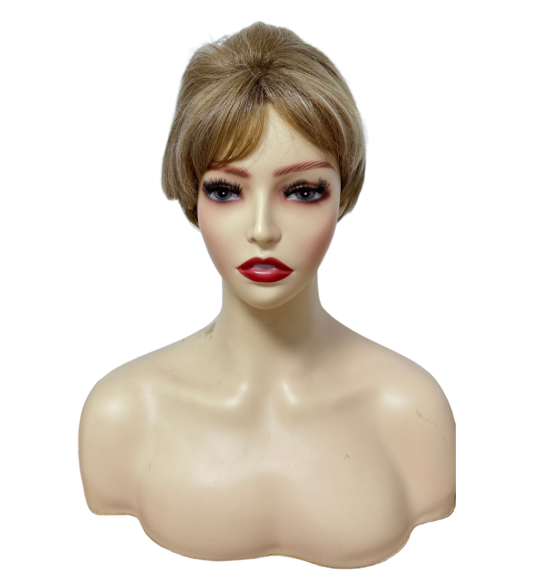
Day 1 vs. Day 3: What Changes?
A newly manufactured wig is designed to look perfect under controlled conditions—during packaging, transport, and product photography. Real life, however, introduces heat, movement, gravity, and personal styling habits.
These factors gradually transform the wig into a more natural-looking state.
1. Factory Styling Is Designed for Transport, Not Daily Wear
1.1 Why New Wigs Look Structured
Most wigs leave the factory with:
- Precisely aligned fibers
- Heat- or steam-set styles
- Temporary protective finishes
- A firm cap structure to maintain shape during shipping
This ensures consistency and quality upon arrival, but it can also make the wig appear overly neat or stiff when first worn.
1.2 The “Brand-New Wig” Appearance
On the first day, wearers often notice:
- Excessive uniformity in the hair
- Strong shine under certain lighting
- Parts or hairlines that appear too defined
- A cap that feels less flexible
These are not defects, but signs of an unworn product.
2. Fiber Relaxation Improves Natural Movement
2.1 Synthetic Fibers Respond to Heat and Motion
Synthetic wig fibers are engineered to hold their shape. However, they also respond to:
- Body heat
- Repeated movement
- Natural friction from wear
Over time, this causes fibers to relax slightly, resulting in softer movement and more realistic separation.
2.2 Human Hair Wigs Also Need Time to Settle
Even wigs made from human hair experience:
- Release of styling tension
- More natural drape after light wear or washing
- Improved responsiveness to personal styling
By Day 3, the hair behaves less like a showroom sample and more like natural hair.
3. Shine Softens with Wear
3.1 Temporary Finishes Fade Gradually
Many wigs are treated with light coatings to:
- Reduce friction during transport
- Protect fibers from dryness
- Enhance initial appearance
As the wig is worn, excess coating diminishes, reducing unnatural shine and improving realism—particularly under indoor or camera lighting.
4. The Wig Adapts to the Wearer’s Head
4.1 Cap Materials Become More Flexible
With repeated use:
- Elastic sections loosen slightly
- The cap conforms more closely to head shape
- Pressure points redistribute
This results in a better fit and a more stable appearance.
4.2 Lace Fronts Improve After Break-In
Lace components benefit significantly from wear:
- Lace lies flatter against the skin
- Hairlines blend more seamlessly
- Parting appears less rigid
This is why many professionals pre-condition lace wigs before final styling.
5. Styling Transitions from “Set” to Natural
5.1 Factory Styling Is Intentionally Controlled
Initial styles are often:
- Symmetrical
- Over-defined
- Designed for durability rather than realism
Daily movement and light restyling gradually soften these effects.
5.2 Personal Adjustment Makes a Difference
By the third day, most wearers have:
- Adjusted the part placement
- Balanced volume around the face
- Learned how the wig responds to brushing and touch
This interaction plays a major role in improving the final look.
6. Why Professionals Intentionally Break In Wigs
In professional settings, it is common practice to:
- Lightly wash new wigs
- Loosen factory-set styles
- Wear-test lace for better blending
This is done for one reason: a lightly broken-in wig almost always looks more natural than one worn straight from the box.
Conclusion: Natural Appearance Takes Time
A wig looks better on Day 3 because:
- Fibers relax and move more naturally
- Excess shine diminishes
- The cap adapts to the wearer
- Styling becomes personalized
Rather than expecting perfection on the first wear, understanding this process helps set realistic expectations—and leads to better results.
A wig does not lose quality after a few days of wear.
In many cases, it finally begins to show its true potential.