When people shop for wigs, the first question is almost always about lace.
HD lace or transparent? Swiss or French? 13×4 or full lace?
Lace matters, sure. But if a wig is meant to be worn day after day, the lace is rarely what decides whether it ends up being loved—or quietly abandoned in a drawer.
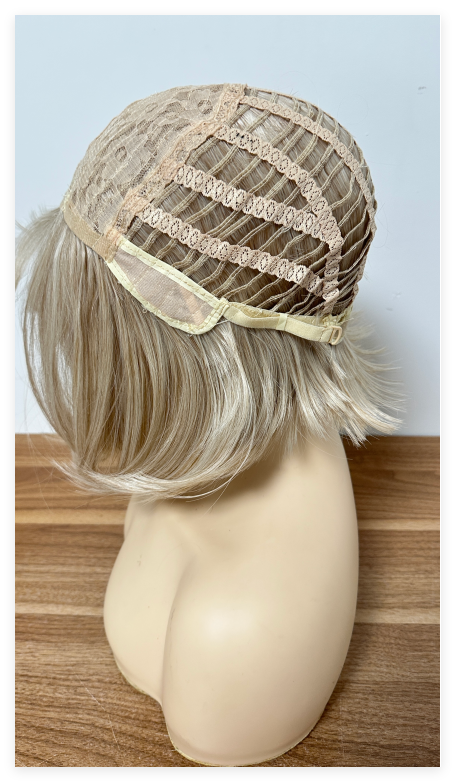
What actually makes or breaks daily wear is the cap.
Lace is what you see. The cap is what you feel.
Lace affects how natural the hairline looks in the mirror.
The cap affects how your head feels after six hours.
That difference sounds small until you live with it.
A beautiful lace front won’t help much if the cap traps heat, presses unevenly, or shifts when you move. Over time, discomfort always wins. Even the most natural-looking wig won’t get worn if it gives you a headache by noon.
Daily wear is about pressure, not perfection
For occasional wear—photoshoots, events, short outings—you can tolerate a lot. Tight elastic. Dense wefts. Heavier construction.
Daily wear is different.
When a wig is on your head for 8–12 hours, tiny details become very loud:
- Where the seams sit
- How evenly the weight is distributed
- Whether the cap breathes or holds heat
- If the ear tabs rub or stay flat
This is why some people say, “The wig looks great, but I just don’t reach for it.”
They’re not talking about lace. They’re talking about comfort—without realizing it.
A comfortable cap disappears. That’s the goal.
The best daily wigs have one thing in common:
after a while, you stop noticing them.
Lightweight caps, flexible materials, and thoughtful structure matter more than whether the lace melts perfectly into skin. A mono top, a well-designed full lace cap, or even a lace top with a breathable base can all work—if the cap is balanced and soft.
Comfort isn’t one feature. It’s a combination:
- Breathability that keeps your scalp from overheating
- Soft materials that don’t irritate sensitive skin
- A fit that feels secure without being tight
- Density that doesn’t pull or drag
When these things are right, the wig becomes wearable in real life, not just on camera.
Why lace gets all the attention (and shouldn’t)
Lace is easy to market.
You can see it in photos. You can name it. You can upgrade it.
Cap comfort is quieter. Harder to explain. Harder to photograph. But it’s what determines whether someone buys one wig—or becomes a repeat customer.
Many experienced wig wearers eventually stop chasing “the best lace” and start asking better questions:
- Is the cap lightweight enough for summer?
- Will this feel okay after a full workday?
- Does the construction match how often I’ll wear it?
That shift usually comes after a few uncomfortable lessons.
Choosing for real life, not just first impressions
If a wig is meant for everyday use, it makes sense to prioritize:
- Cap construction over lace hype
- Fit and flexibility over extreme density
- Wearability over showroom perfection
A slightly less “invisible” lace paired with a truly comfortable cap will get worn far more often than a flawless hairline sitting on an uncomfortable base.
And in the end, the most natural wig is the one you actually wear.
For brands, retailers, and long-term wig wearers, this is where customization really starts to matter.
At Tongen Wigs, daily wear comfort is treated as a construction question, not just a lace choice. Cap structure, density balance, ventilation, and fit are adjusted together based on how the wig is actually meant to be worn—everyday use, not just first impressions. That’s why many wholesale and OEM clients focus less on chasing lace trends, and more on building wigs their customers can truly live in.
Because when a wig feels right on the head, it doesn’t need to convince anyone. It simply gets worn.