Blonde wigs—especially 613, ash blonde, and platinum shades—are among the most visually striking hair colors on tBlonde wig toning is often explained in beauty terms—but in reality, it is a problem rooted in color science, material chemistry, and optical perception.
From a professional wig factory’s perspective, purple shampoo is not a miracle product. It is a predictable, controllable color-correction tool that works because of how light, pigment, and hair fiber interact.
This article explains the science behind blonde wig toning—clearly, logically, and without marketing myths.
From a professional wig factory’s point of view, “blonde maintenance” is less about beauty tricks and more about color science. One of the most common questions we hear from customers is:
“Why does my blonde wig turn yellow, and why does purple shampoo fix it?”
The answer lies in chemistry, optics, and how hair fiber reacts to processing and the environment. Let’s break it down—clearly, logically, and scientifically.
1. Blonde Wigs Are Engineered Colors, Not Natural Shades
Unlike dark wigs, blonde wigs are not “dyed into existence.”
They are created by removing pigment, not adding it.
During factory processing:
- Natural eumelanin (dark pigment) is broken down first
- Pheomelanin (red–yellow pigment) remains the longest
- Complete removal would compromise hair strength and elasticity
For this reason, most blonde wigs—especially 613 and platinum tones—retain a controlled level of yellow undertone by design.
Yellow is not a flaw.
It is a structural reality of lightened hair fiber.
2. Why Yellow Tones Become Visible Over Time
Even a professionally toned blonde wig will gradually appear warmer. This is due to optical exposure, not sudden color failure.
Common contributors include:
- UV radiation oxidizing residual pigments
- Heat styling accelerating pigment shift
- Mineral deposits from water (iron, copper)
- Product buildup altering light reflection
From a factory testing standpoint, yellowing is cumulative and surface-based, which is exactly why it can be corrected without re-dyeing.
3. The Color Wheel Principle: Why Purple Neutralizes Yellow
The foundation of blonde toning is the color wheel, a universal model used in physics, printing, and industrial color matching.
- Yellow and purple sit opposite each other
- Opposing colors visually cancel excess warmth
- The result is perceived as neutral or cooler blonde
Purple shampoo does not “change” the blonde color.
It adjusts how light reflects off the hair surface.
This principle applies equally to:
- Human hair wigs
- Pre-lightened factory-toned wigs
- Color-safe synthetic fibers (with appropriate formulas)
4. What Purple Shampoo Actually Does at a Chemical Level
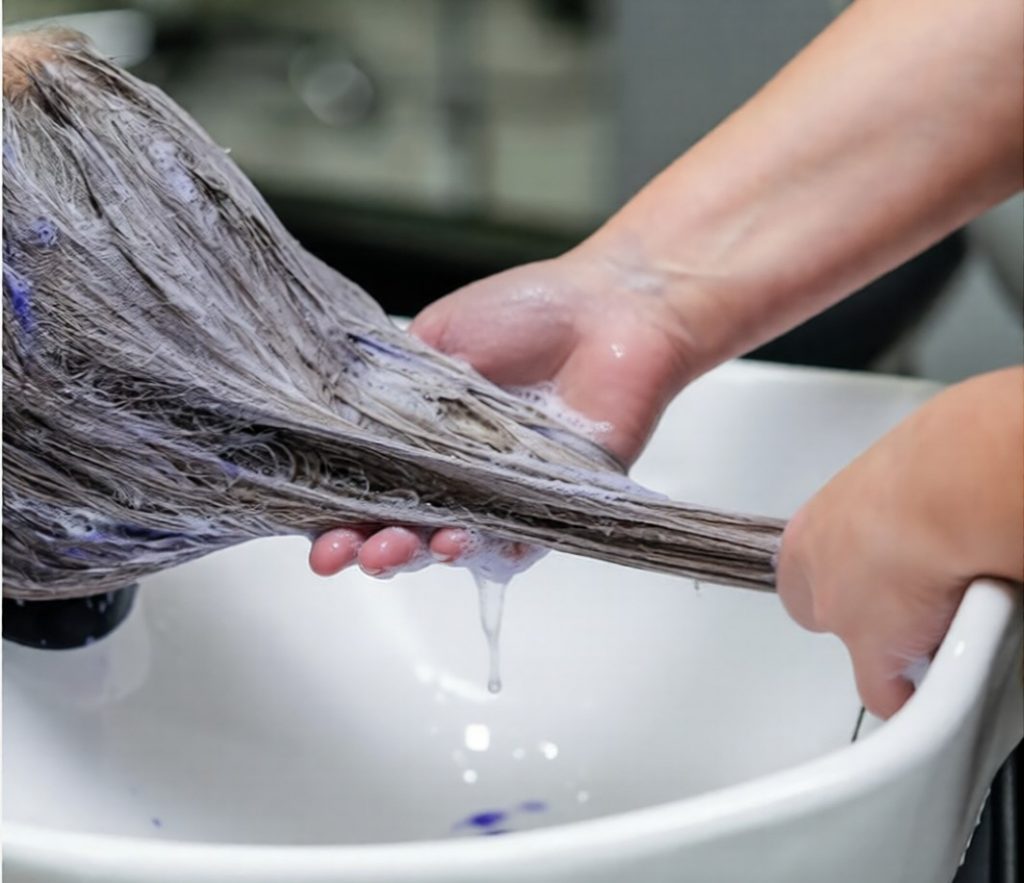
Purple shampoos contain direct-deposit violet pigments that:
- Sit on the outer cuticle layer
- Temporarily bond to porous areas
- Offset visible yellow tones during rinsing
They are not permanent dyes and do not alter internal hair structure.
From a manufacturing view, purple shampoo functions as:
A low-intensity, reversible optical correction system.
5. Why Purple Shampoo Is Effective—but Not for Daily Use
Effectiveness does not mean unlimited use.
Overuse introduces new imbalances:
- Excess pigment accumulation on porous ends
- Gray or muted appearance
- Increased dryness on heavily processed hair
- Uneven tone across lace wigs or hand-tied units
This is why, in factory care guidelines, purple shampoo is classified as a corrective treatment, not a maintenance cleanser.
6. Factory-Recommended Usage Logic
Based on production testing and post-sale feedback:
- Blonde human hair wigs: every 2–4 washes
- High-porosity or 613 wigs: diluted application
- Synthetic blonde wigs: synthetic-safe toning only
Daily washing should rely on neutral, color-safe formulas to preserve tonal stability.
7. An Industry Insight: Toning Begins Before the Wig Ships
Most high-quality blonde wigs are already:
- Pre-toned during production
- Balanced using controlled pigment ratios
- Stabilized before styling and packaging
Purple shampoo is designed to maintain factory color balance, not compensate for poor manufacturing.
Excessive yellow at delivery often signals:
- Low-grade raw hair
- Over-bleaching
- Inconsistent pigment control
Conclusion: Blonde Wig Toning Is About Balance, Not Brightness
Blonde wigs do not fail—they respond to physics.
Yellow tones are not mistakes.
Purple shampoo is not magic.
Daily toning is not better care.
When blonde wig maintenance is understood through color science, the goal shifts from chasing extremes to preserving equilibrium.
From a factory perspective, the best blonde wigs are not the coldest—but the most color-stable.